
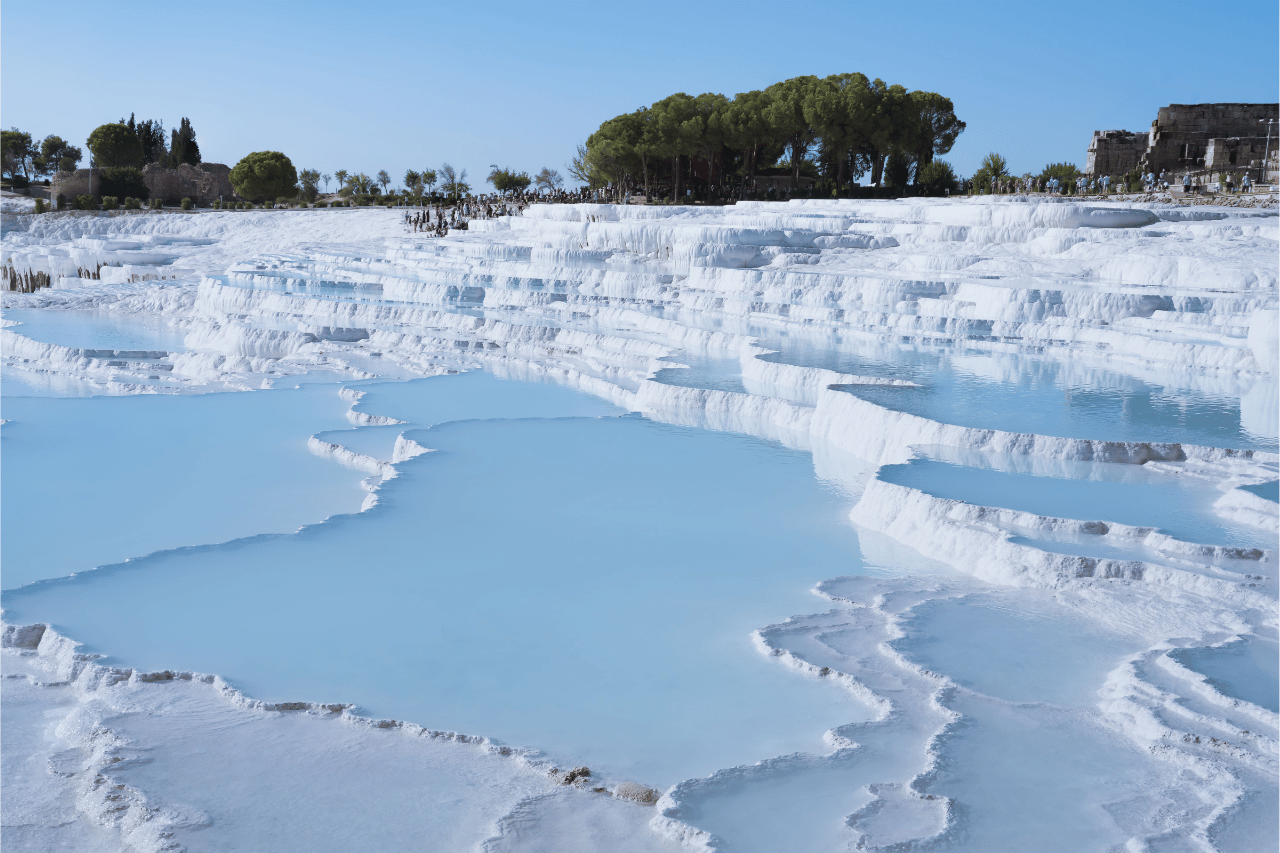
The Science Behind the Snow: Why is Pamukkale White?
In the heart of Turkey's Denizli Province lies one of the world's most surreal natural wonders: Pamukkale, or the "Cotton Castle." From a distance, its cascading terraces look like a frozen waterfall or a field of pristine snow, glowing brilliantly under the Anatolian sun. But what is the secret behind this dazzling white landscape? The answer is a captivating blend of geology, chemistry, and time, creating a phenomenon that is as scientifically fascinating as it is visually breathtaking.
The Geological Alchemy: From Hot Spring to White Terrace
Pamukkale's iconic whiteness is not paint, snow, or any kind of rock. It is travertine, a form of limestone deposited by mineral-rich thermal waters. This transformation is a continuous, dynamic process that has been unfolding for millennia.
The Source: A Deep Thermal Spring
The story begins deep underground. Rainwater seeps into the earth, is heated by geothermal activity, and becomes enriched with dissolved minerals—primarily calcium carbonate (CaCO₃) and carbon dioxide (CO₂). This creates a carbonated, mineral-heavy solution. Under high pressure underground, the calcium carbonate remains dissolved.
The Chemical Reaction: Precipitation of Calcite
When this super-saturated water emerges at the surface at Pamukkale's hot springs (at around 35°C), it is exposed to the open air. The pressure drops, and carbon dioxide gas is released into the atmosphere, much like bubbles escaping from a soda bottle. This change in the water's chemical balance causes the dissolved calcium carbonate to solidify, or precipitate, as a soft mineral called calcite.
The Build-Up: Nature's Master Sculptor
This calcite doesn't just form a layer; it actively builds structures. As the water trickles down the mountainside, the calcite crystals cling to every surface—soil, rock, and even previous layers of travertine. Over centuries, this slow, persistent deposition has created the magnificent, stair-stepped terraces, pools, and stalactites we see today. The pure white color is simply the natural color of the calcite mineral itself.
Factors That Maintain the Brilliant White
Pamukkale's whiteness isn't just a historical artifact; it's a living landscape. Several factors contribute to its sustained brilliance:
- Constant Mineral Supply: The thermal springs are a continuous source, depositing fresh, white calcite.
- Water Flow & Oxygen: The shallow, flowing water allows for rapid CO₂ degassing and efficient calcite precipitation.
- Sunlight: The bright Turkish sun helps bleach and dry the deposits, enhancing their white appearance.
- Past Conservation: In the 20th century, hotels were built on the travertines, and water was diverted to pools, causing the terraces to turn grey and brown from algae. A major UNESCO-led restoration in the 1990s removed the buildings and restored the natural water flow, allowing Pamukkale to return to its original, gleaming white state.
More Than Just White: The Healing Waters
The same process that creates the white terraces also fills them with warm, therapeutic water. Rich in calcium, magnesium, and bicarbonate, these turquoise-blue pools are famed for their supposed healing properties for skin, eyes, and circulation. The stunning contrast between the bright white travertine and the vibrant blue pools is what makes Pamukkale a photographer's paradise.
A Fragile Wonder: Visiting with Respect
Understanding why Pamukkale is white underscores its fragility. The travertine is relatively soft. To preserve it, visitors are required to walk barefoot on the terraces. This protects the delicate calcite layers from abrasion and damage. It’s a small act that helps ensure this geological masterpiece continues to glow white for generations to come.
So, the next time you see a photo of Pamukkale's radiant slopes, you'll see more than just a beautiful landscape. You'll see the incredible result of a slow-motion chemical reaction—a testament to the patient, creative power of nature, where water and stone conspire to build a castle of cotton.