
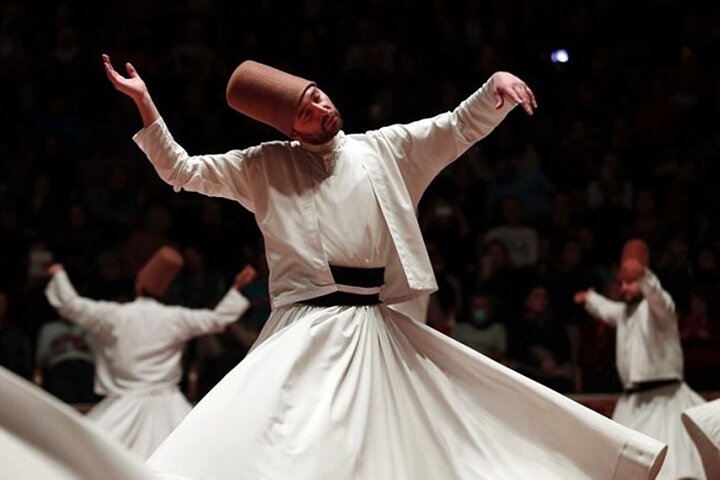
Imagine standing in the ancient city of Hierapolis, where the milky white travertine terraces of Pamukkale glisten under the Turkish sun. Now, add to that the haunting melody of a ney flute and the slow, hypnotic spin of a Whirling Dervish. This is not just a show; it’s a spiritual journey. The Pamukkale Whirling Dervish performance is one of Turkey’s most profound cultural experiences, blending UNESCO World Heritage scenery with 800-year-old Sufi tradition.
In this guide, we explore what makes this performance so special, where to see it, and how to appreciate its deep spiritual meaning.
The Spiritual Significance of the Sema
The Whirling Dervish ceremony, known as the Sema, is not a folk dance. It is a sacred ritual of the Mevlevi order, founded by the poet Rumi (Mevlana) in the 13th century. The spinning represents a mystical journey toward divine love and truth.
What the Whirling Represents
- The Spin: Dervishes turn from right to left, embracing the universe. Their outstretched arms symbolize receiving divine grace (right hand up) and distributing it to humanity (left hand down).
- The Attire: The white robe (tennure) represents a funeral shroud—the ego’s death. The black cloak (hırka) is the earthly tomb, removed before spinning.
- The Camel Hair Hat: The tall felt hat (sikke) symbolizes the tombstone of the ego.
Where to See the Pamukkale Whirling Dervish Performance
Unlike nightly shows in Istanbul or Cappadocia, performances in Pamukkale are special events. They typically occur in atmospheric venues that enhance the spiritual mood.
1. The Ancient Theater of Hierapolis
The most iconic venue. During special festivals (usually in spring or fall), the Sema is performed in the Roman theater. Imagine 12,000 seats carved into a hillside, with the ghostly white terraces glowing in the distance. It is an unforgettable fusion of history and spirituality.
2. Local Cultural Centers (Pamukkale & Karahayit)
Several hotels and cultural centers in the nearby town of Karahayit host regular performances. While not as ancient as the theater, these indoor venues offer more frequent shows and include dinner options.
3. Special Mevlana Commemorations
December 17th marks the anniversary of Rumi’s death (his wedding day with the divine). Pamukkale holds special ceremonies on this date, often at the Hierapolis Archaeology Museum.
What to Expect During the Ceremony
The performance follows a strict protocol, lasting about 60–70 minutes. It is highly formalized and deeply meditative.
The Structure of the Sema
- Naate: A eulogy for the Prophet Muhammad, setting a reverent tone.
- Devr-i Veled: The dervishes walk in a circle three times, greeting each other—symbolizing souls greeting God.
- Four Selams (Musical Movements):
- 1st Selam: Birth of human understanding.
- 2nd Selam: The ecstasy of divine love.
- 3rd Selam: The dissolution of the ego.
- 4th Selam: Unity with the divine.
- Finale: The dervishes stop spinning. The Quran is recited, and the ceremony closes with a prayer for peace.
Tips for Attending the Performance
To fully appreciate the Sema, follow these guidelines:
- Dress Modestly: Shoulders and knees covered. Women may want a scarf.
- Arrive Early: Seating is often unreserved; the best spots fill quickly.
- No Photography During: Flash disrupts the mood. Photos are usually allowed before and after.
- Silence Your Phone: The ceremony requires absolute quiet to enter a meditative state.
- Skip the Wine: This is a religious event, not a dinner show. Approach it with respect.
Best Time to Combine Pamukkale & the Sema
The ideal time is April–May or September–October. Weather is pleasant, crowds are thinner, and there are higher chances of special performances in the ancient theater. Winter (Dec) offers the Rumi commemoration events, but snow can close the terraces.
Booking Your Experience
Tickets for the Pamukkale Whirling Dervish performance are limited. They can be purchased online via official cultural event sites or at the Pamukkale Tourism Office. Prices range from €20–€40, depending on the venue. Avoid touts offering “VIP” packages that include alcohol—they miss the point entirely.
you can book from pamukkaledailytour.com
Frequently Asked Questions
Find quick answers to common queries below.