
More Than Just Cotton Castles: The Ancient Portal of Hierapolis
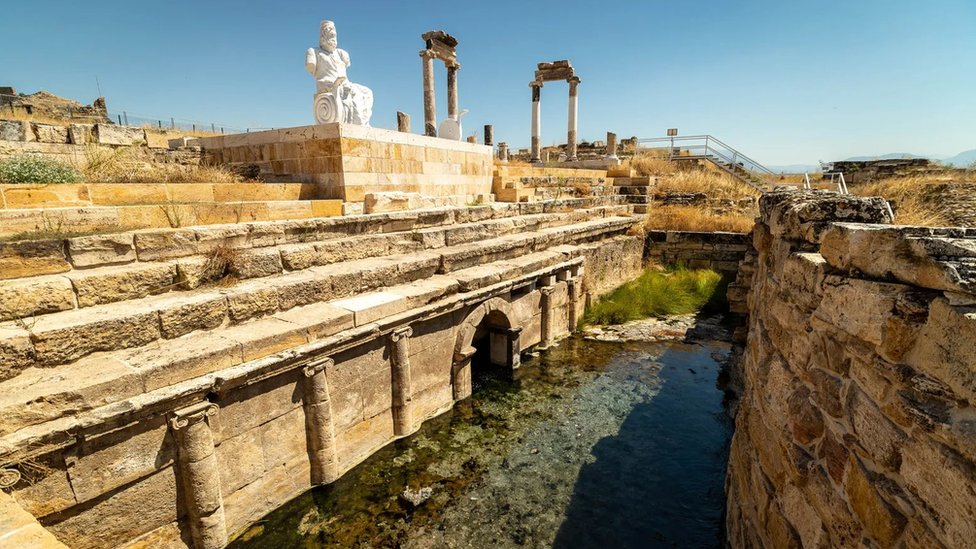
While the dazzling white travertine terraces of Pamukkale are a global icon, few visitors realize they are walking atop one of antiquity's most feared and sacred sites. Known in ancient times as the Ploutonion or Plutonium, the 'Gate to Hell' was a portal to the underworld, shrouded in deadly mystery and religious awe. Located within the sprawling ruins of the Greco-Roman city of Hierapolis, this site offers a profound journey into the beliefs, fears, and scientific understanding of the ancient world.
A Deadly Phenomenon: The Science Behind the Legend
The terrifying reputation of the Gate to Hell was not mere superstition; it was rooted in a lethal and observable natural phenomenon. The site sits directly above a deep seismic fissure, from which toxic volcanic gases, primarily carbon dioxide (CO2), continuously seep to the surface. This invisible, odorless gas, heavier than air, would pool in the enclosed grotto and its immediate surroundings, creating a deadly layer that suffocated any animal—or person—who ventured too close.
Ancient priests of Cybele, known as the Galli, understood this danger and performed rituals that appeared miraculous. Strabo, the Greek geographer, recorded in 7 BC how these priests could enter the grotto unharmed, holding their breath, while bulls or birds led inside would instantly drop dead. This 'divine power' solidified the site's status as a true entrance to Hades, ruled by the gods Pluto (hence Ploutonion) and Kore.
Exploring the Gate to Hell Today: What You'll See
Excavations led by Italian archaeologist Francesco D'Andria in 2013 conclusively rediscovered the legendary portal. Today, visitors can stand before this powerful historical site.
Key Features of the Plutonium Site
- The Stone Steps & Portal: Descend the original steps that led priests and pilgrims into the sacred precinct. The entrance to the grotto itself is now fenced for safety, but its ominous, cave-like opening is clearly visible.
- The Pool of Pluto: In front of the cave, a thermal pool with ionic columns was built, where pilgrims would bathe in waters believed to have prophetic powers, guided by the priests.
- The Temple of Apollo: Directly adjacent to the Plutonium stands the ruins of the Temple of Apollo, one of Hierapolis's chief gods. This proximity was no accident; it symbolized the complex relationship between the celestial god and the chthonic (underworld) powers.
- Safety & Preservation: Modern gas sensors confirm CO2 levels at the grotto's mouth can still be fatal. Protective barriers ensure safe viewing, allowing you to witness history without the ancient risk.
- Kerberos:At the entrance there is a statue of Kerberos, the three headed dog who ıs military world guardian
Planning Your Visit to Hierapolis & Pamukkale
The Gate to Hell is one compelling part of the vast Hierapolis archaeological zone, which is integrated with the Pamukkale travertines. A single ticket grants access to both wonders.
Essential Travel Tips
- Best Time to Visit: Spring (April-May) and Autumn (September-October) offer pleasant temperatures and fewer crowds. Arrive at opening time (usually 8:00 AM) to experience the travertines in softer light and have the archaeological site more to yourself.
- Getting There: The nearest major town is Denizli. From there, frequent dolmuş (minibuses) go directly to the Pamukkale/Hierapolis entrance. Many visitors also opt for day tours from coastal resorts like Kusadasi or inland cities like Selçuk (Ephesus).
- What to Wear: Sturdy, comfortable walking shoes are non-negotiable for the rocky, uneven paths of Hierapolis. Bring a hat, sunscreen, and plenty of water. You'll need swimwear if you plan to dip in the famous Antique Pool (Cleopatra's Pool).
- Ticket & Guide: Consider hiring a licensed guide at the entrance for deep historical context. The site is large, and a guide can efficiently lead you to highlights like the Plutonium, the immense theatre, and the Necropolis.
Beyond the Gate: Must-Sees in Hierapolis-Pamukkale
Your ticket unlocks a full day of exploration. Don't miss:
- The Travertine Terraces: Walk barefoot on the dazzling white calcium carbonate pools. The water flow is managed to preserve the formations, so specific terraces may be accessible on rotation.
- The Hierapolis Theatre: A marvel of Roman engineering with stunning acoustics and a view overlooking the entire valley.
- The Antique Pool: Swim among submerged Roman columns in warm, mineral-rich waters (additional fee applies).
- The Hierapolis Archaeology Museum: Housed in the old Roman baths, it displays fascinating artifacts from the site, including finds from the Plutonium.
A Journey Through Myth and Earthly Power
Visiting the Gate to Hell in Pamukkale is more than a photo opportunity; it's a tangible connection to the ancient mindset. It represents a place where geology and theology collided, where priests harnessed a natural lethal gas to demonstrate divine authority, and where pilgrims sought healing and prophecy at the very threshold of the afterlife. As you stand before the quiet stone steps of the Plutonium, let your imagination bridge the centuries—envision the fumes, the chanting, the sacrificed animals, and the profound belief that here, one could touch the realm of the dead. It is this powerful narrative, set against the surreal beauty of the cotton castles, that makes Pamukkale a truly unparalleled destination on any traveler's map.